Hair loss, thinning hair, and bald patches can affect confidence and personal appearance. Fortunately, modern non-surgical hair restoration methods such as hair bonding and hair weaving provide effective solutions. Both techniques help restore the appearance of fuller and thicker hair without undergoing surgery. However, they differ in procedure, durability, maintenance, and suitability.
In this detailed guide, we’ll explore hair bonding vs hair weaving, their key differences, advantages, disadvantages, and which option might be best for your needs.
What Is Hair Bonding?
How Hair Bonding Works
- The stylist examines the scalp and hair loss pattern.
- A customized hair patch matching your natural hair color and texture is prepared.
- A special adhesive is applied to attach the patch to the scalp or existing hair.
- The hair system is styled to blend naturally with the remaining hair.
Benefits of Hair Bonding
- Instant results with visible hair coverage.
- Non-surgical and painless procedure.
- Suitable even for people with very little natural hair.
- Quick process compared to other hair restoration treatments.
Drawbacks of Hair Bonding
- Adhesives may cause irritation in sensitive scalps.
- Requires regular maintenance and re-bonding.
- Usually less durable compared to weaving techniques.
What Is Hair Weaving?
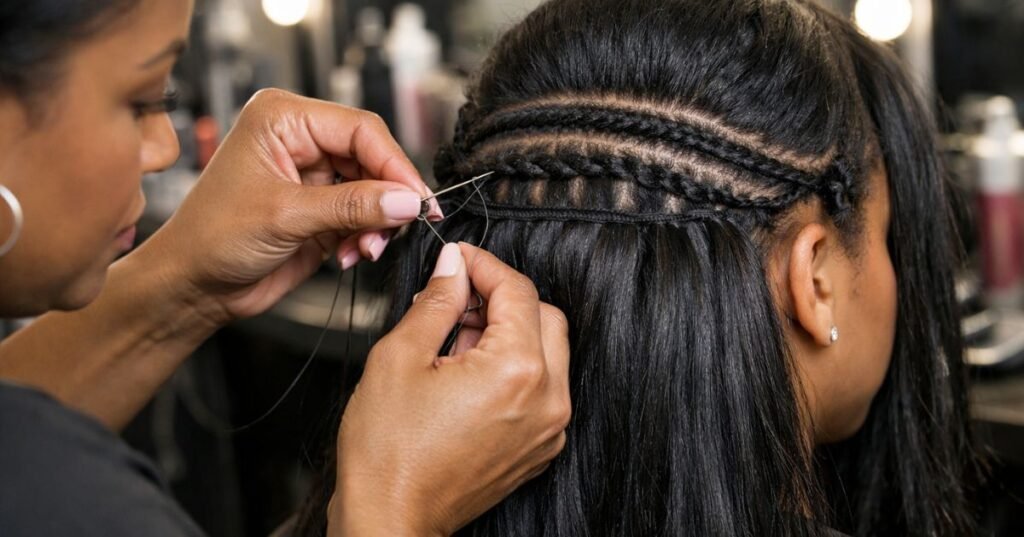
Hair weaving is another non-surgical hair restoration technique where artificial or natural hair extensions are attached to existing hair by braiding, sewing, or weaving them together. Unlike hair bonding, weaving relies on your natural hair as a base to attach additional hair strands.
How Hair Weaving Works
- The stylist creates a base by braiding the natural hair.
- Hair extensions or wefts are sewn or woven into these braids.
- The extensions are blended with natural hair to create volume and length.
- Final styling ensures a natural look.
Benefits of Hair Weaving
- Provides longer-lasting results compared to bonding.
- Offers a natural and voluminous appearance.
- Does not rely heavily on adhesives or glue.
Drawbacks of Hair Weaving
- Requires sufficient natural hair for braiding.
- Tight braids may cause mild discomfort or tension on the scalp.
- Maintenance visits are necessary to adjust the extensions.
Hair Bonding vs Hair Weaving: Key Differences
| Feature | Hair Bonding | Hair Weaving |
|---|---|---|
| Technique | Hair patch attached with adhesive or glue | Extensions sewn or braided into natural hair |
| Suitability | Works even with minimal hair | Requires natural hair to braid |
| Durability | Temporary (few weeks) | Semi-permanent (longer lasting) |
| Appearance | Natural but may depend on adhesive quality | Very natural with proper blending |
| Comfort Level | Lightweight but adhesive may irritate scalp | Slight tension due to braids |
| Maintenance | Frequent touch-ups required | Adjustments needed every few weeks |
| Cost | Usually cheaper initially | Slightly higher but more durable |
In simple terms, hair bonding is ideal for quick fixes, while hair weaving offers longer-lasting and more natural results.
Which Option Is Better for Hair Loss?
The choice between hair bonding and hair weaving depends on several factors:
- Extent of Hair Loss: If you have extensive baldness, hair bonding may be more suitable because it does not require natural hair. If you still have moderate natural hair, weaving can provide better integration.
- Lifestyle: People with active lifestyles often prefer hair weaving because it stays secure for longer periods.
- Budget: Hair bonding may appear cheaper initially, but frequent maintenance can increase long-term costs.
- Desired Appearance: Hair weaving generally provides a more natural and fuller look when performed by experienced professionals.
Maintenance Tips for Both Methods
To maintain your hair replacement system and protect natural hair, follow these tips:
- Use mild or sulfate-free shampoos.
- Avoid excessive heat styling tools.
- Visit a professional stylist for regular maintenance.
- Keep the scalp clean to prevent irritation or infection.
- Avoid pulling or tugging on hair extensions.
Proper care can significantly extend the lifespan of both hair bonding and weaving treatments.
Who Should Choose Hair Bonding?
Hair bonding may be the right option if you:
- Have significant bald patches or thinning areas.
- Want quick and immediate results.
- Prefer a non-surgical and painless procedure.
- Need a temporary hair restoration solution.
Who Should Choose Hair Weaving?
Hair weaving is ideal for people who:
- Have enough natural hair for braiding.
- Want longer-lasting hair enhancement.
- Prefer more natural integration with existing hair.
- Are willing to invest in maintenance and professional styling.
Final Thoughts
Both hair bonding and hair weaving are popular non-surgical hair restoration techniques that help individuals regain confidence by improving hair volume and coverage. Hair bonding is best suited for quick, temporary solutions, while hair weaving provides a more durable and natural-looking result for people with sufficient natural hair.
Before choosing any hair replacement method, it’s important to consult a professional hair specialist who can evaluate your hair condition, scalp health, and lifestyle needs. With the right treatment and proper maintenance, both techniques can significantly enhance your appearance and boost confidence.